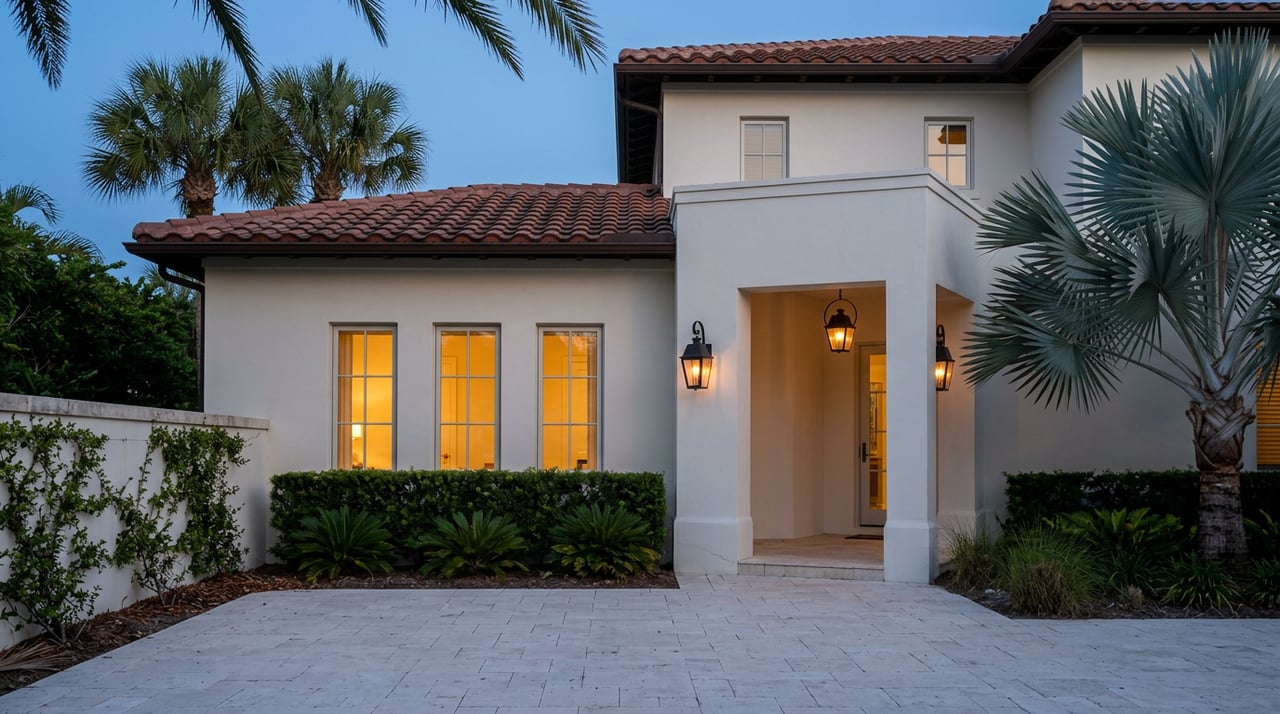
A new owner in Rosemary Beach decides to repaint her trim the exact same shade of white it already is. The wood has weathered, the color has faded a touch, and she wants it to look the way it did the day she closed. She calls a painter, picks up the same swatch from the same manufacturer, and assumes this is a weekend job.
It isn't. Under Rosemary Beach's Architectural Review Board, even a like-for-like paint job requires a submittal. Not because the color is changing, but because any exterior modification, no matter how minor, has to pass through the review process. She now needs drawings from a licensed design professional before a single brush touches the siding, and that paperwork alone typically runs $500 to $1,500 before the painter even shows up.
This is the part of Rosemary Beach ownership that never shows up on a listing sheet. Buyers comparing price per square foot across the 30A corridor are looking at the wrong number if they stop at the sale price. The real comparison is what happens after closing, when the town's design code turns routine homeownership into a series of paid approvals.
The charm is legislated, not organic
Rosemary Beach looks the way it does because Andres Duany and Elizabeth Plater-Zyberk drew a Regulating Plan for the town back in 1995, organizing every lot into one of twelve predefined building types, from the mixed-use Arcade buildings along Main Street to the inward-facing Courtyard Houses tucked behind them. That plan, along with the Architectural Regulations and Landscaping Regulations that sit underneath it, is what the Rosemary Beach Property Owners Association still refers to collectively as the Code.
The POA is direct about what the Code is for. On its own site, it describes the document this way:
"The Code is a protective document designed to preserve and enhance the quality of life."
That protection has a cost structure attached to it. A Town Architect reviews every submittal for compliance with the Pattern Book, which governs details as specific as window proportions and paver materials. Nothing about the streetscape is left to individual taste, which is exactly why the town reads as cohesive rather than assembled lot by lot. It's also why a homeowner can't just match an existing paint color without paperwork.
Three moments the bill arrives
For a buyer sizing up total cost of ownership, the fee stack shows up at three distinct points, not one.
| When | What triggers it | What it typically runs |
|---|---|---|
| At closing | Ownership transfer to the new buyer | A 1% transfer fee, so $20,000 on a $2 million sale |
| Before any exterior change | ARB submittal for even a repaint or a new front door | $500 to $1,500 in architectural fees for simple projects |
| Before major renovation or new construction | Capital Contribution Fee plus engineered ARB package | $5,000 to $25,000 in capital contribution, plus $15,000 to $35,000 in design and compliance costs |
None of that includes the ongoing HOA dues, which run $400 to $800 a month for single-family homes and cover landscaping, security, and common-area upkeep, not the design review itself. A buyer who plans to renovate a resale property soon after closing should budget for two of these three line items back to back: the transfer fee at the table, then the capital contribution fee and ARB package before the contractor's crew shows up.
This is worth sitting with for a second, because it changes what a comparison against a neighboring 30A community actually looks like. A buyer weighing two similarly priced homes, one in Rosemary Beach and one in a community without an architectural review requirement, isn't just comparing square footage and finishes. They're comparing a home where a future kitchen addition sails through a standard county permit against one where the same addition needs a capital contribution payment and an engineered ARB package before the county permit is even in the conversation.
The premium isn't only about the beach
Rosemary Beach listings carried a median price of roughly $2.74 million as of August 2026, with a median list price around $1,500 per square foot. That per-square-foot number is high even by 30A standards, and the design code is a meaningful part of the explanation. A tightly enforced Pattern Book keeps every block looking intentional, which is exactly the kind of consistency buyers pay a premium for. The fee stack above is the mechanism that funds and enforces that consistency. Buyers who only look at the median price are pricing the result. Buyers who understand the fee stack are pricing the system that produces it.
The parking rule that quietly adds a monthly bill
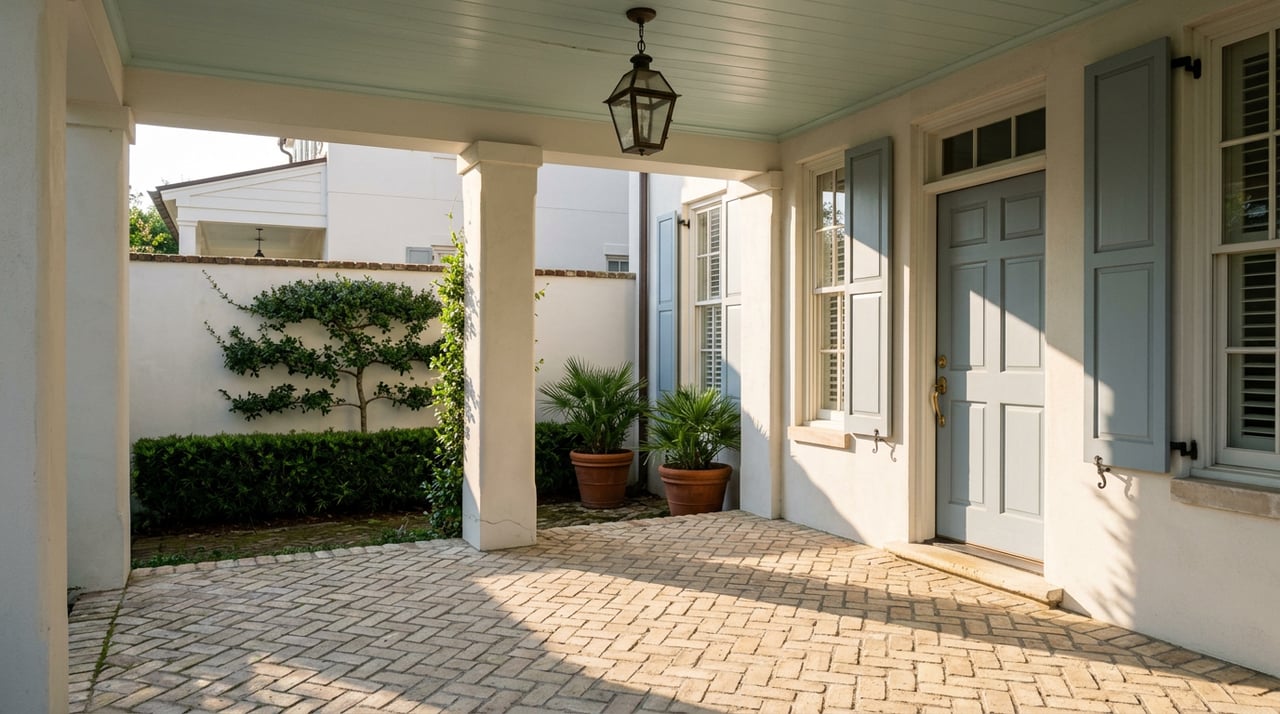
The Code doesn't stop at paint and additions. It also dictates surface materials, and that has a side effect worth knowing before you assume a driveway fix is simple. The Pattern Book's requirement for permeable surfaces means owners can't pour an asphalt parking pad to relieve pressure on tight alley parking. Garages, which were designed to keep cars off the street, often end up storing bikes, beach gear, and golf carts instead. During peak season, that pushes overflow parking onto narrow streets with limited legal spaces.
Owners who are serious about keeping rental guests or family cars off the street end up renting off-site storage, typically $150 to $300 a month, just to keep the garage clear enough to function as a garage. It's a small number next to a seven-figure purchase price, but it's a recurring cost that has nothing to do with the mortgage and everything to do with the design code.
What this means before you write an offer
If you're comparing Rosemary Beach to another 30A neighborhood, the math isn't sale price versus sale price. It's sale price plus a fee stack that activates the moment you want to change anything, versus a sale price with a more conventional permitting path. Neither approach is right or wrong. A tightly enforced code is exactly why the streetscape holds its value and its look over time. But if your plan involves any renovation in year one, price out the capital contribution fee and the ARB design package now, not after you've already made an offer. Ask directly what building type your target lot falls under, since that determines your setback rules and what you can and can't change about the exterior. And if a low-maintenance turnkey purchase is the goal, factor the ARB submittal cost into even small cosmetic updates, because "small" doesn't mean "exempt" under this code.
Does every exterior change really need approval, even something cosmetic?
Yes. Repainting in the same color still requires a submittal with drawings from a licensed design professional, which is why even minor projects carry a baseline fee before construction starts.
Is the capital contribution fee separate from monthly HOA dues?
It is. HOA dues cover ongoing maintenance and amenities. The capital contribution fee is a one-time charge tied specifically to new construction or major renovation projects.
Does this fee structure apply the same way to condos as it does to single-family homes?
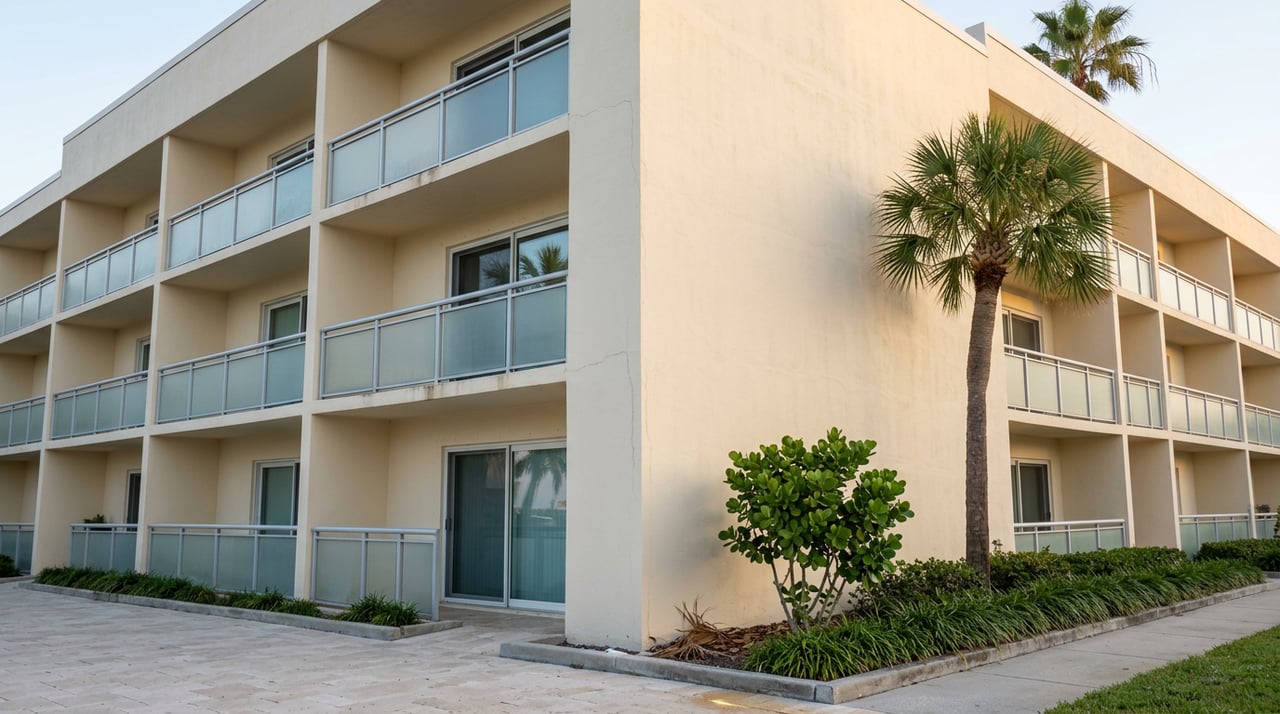
The core requirement, ARB review for exterior changes, applies broadly across Rosemary Beach. Dollar figures for HOA dues, transfer fees, and capital contribution fees can vary by property type and by the specific building type your unit falls under, so it's worth confirming the exact structure for the property you're considering rather than assuming it matches a neighbor's.
If you're weighing Rosemary Beach against another stretch of the Emerald Coast and want the real cost picture, not just the listing price, Resort Real Estate Group can walk you through what a specific property's fee stack looks like before you write an offer.